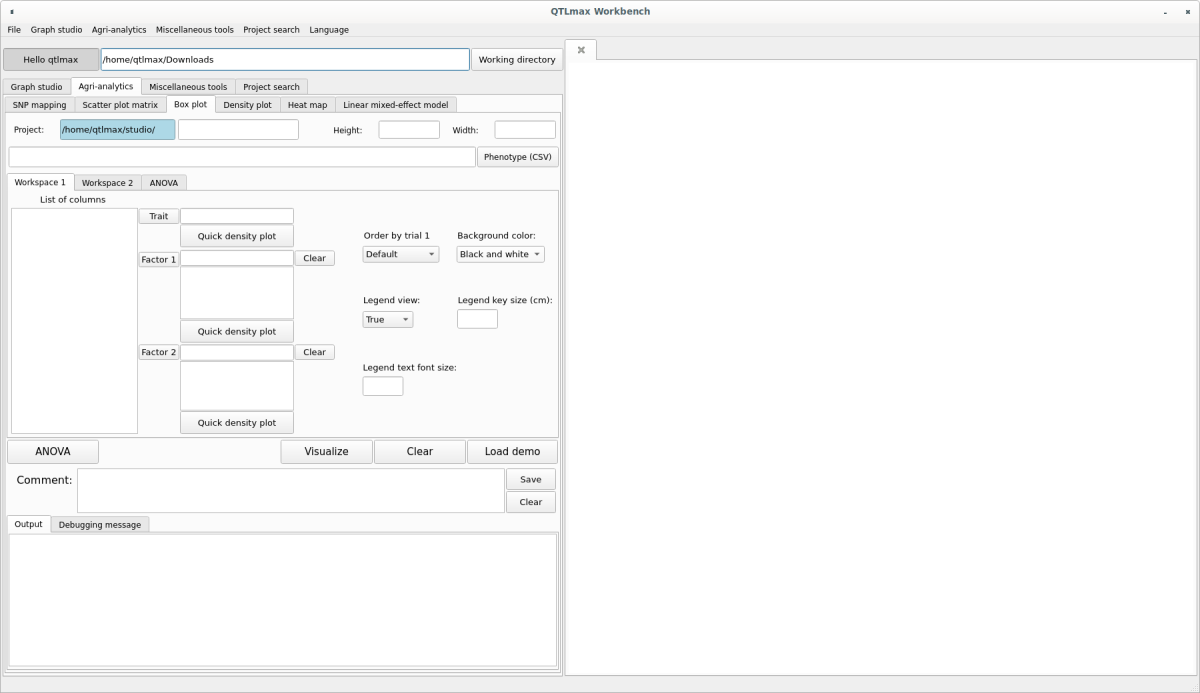
[Figure 1] shows the QTLmax Workbench with the “Box plot” tab selected.
(Figure 1)
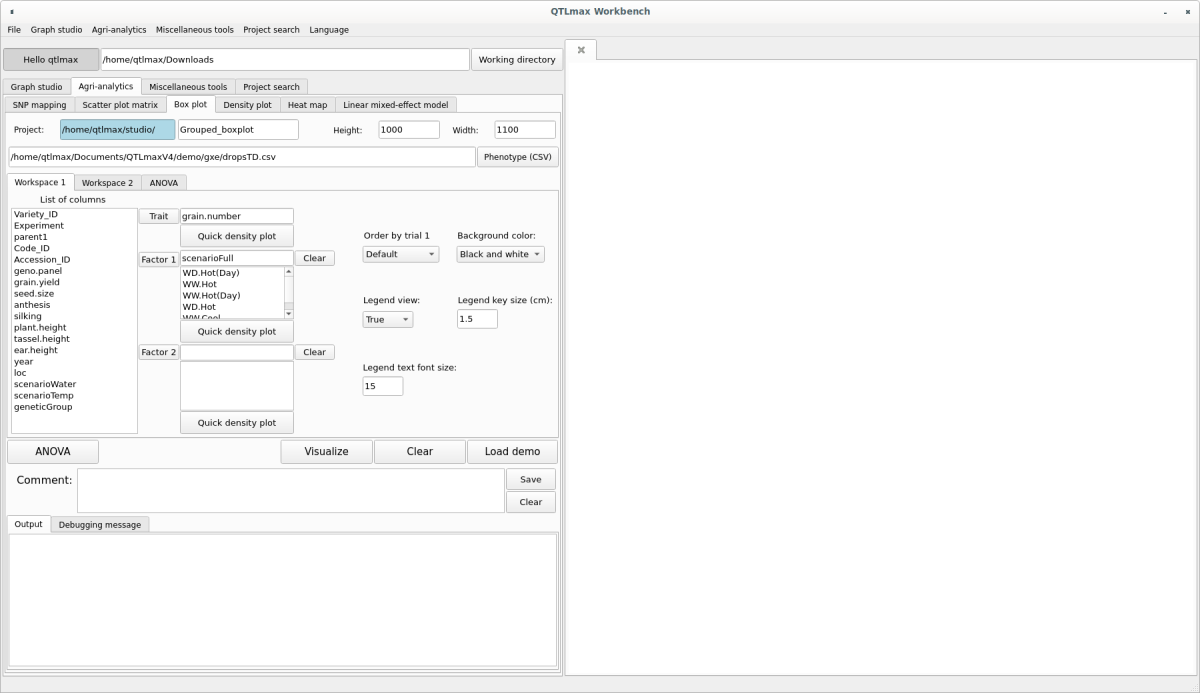
The Box plot tab has many configuration options. If you prefer not to select each setting individually, simply click the [Load demo] button. You’ll see most of the settings automatically configured (Figure 2). The input data format is a CSV (*.csv) file containing phenotypic information along with environmental factor data. After replacing the demo data with your own, you can freely change the settings to your desired values.
Once you select the input data file, the header values from that file will be listed in the “List of columns” box. From this list, select the trait you want to use and click the [Trait] button; that trait will then be selected. Similarly, select the environmental factor you want to use from the list and click the [Factor 1] button to select that environmental factor. (Figure 2)
(Figure 2)
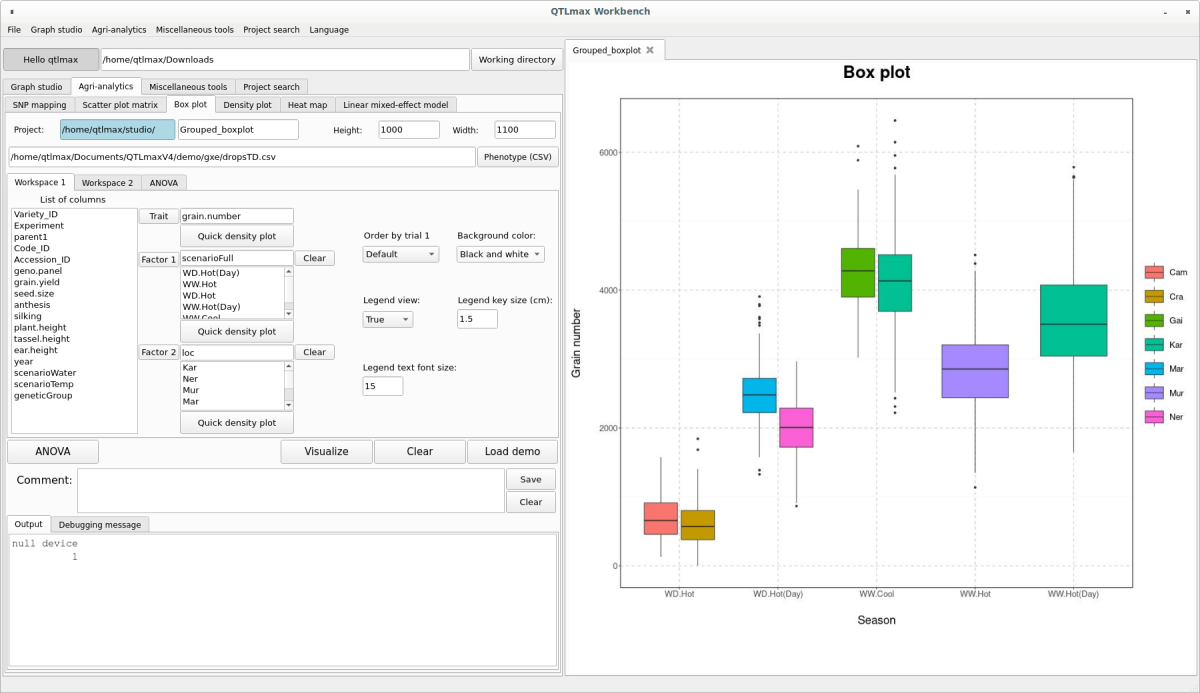
If you want to use a second environmental factor, select another environmental factor from the list and click the [Factor 2] button to select the second environmental factor (Figure 3).
Go to the Workspace 2 tab page and select whether to display the Main title. If you check the display option, enter the Main title value. Once all settings are complete, click the [Visualize] button, and you’ll see the Box plot appear on the right-hand drawing panel (Figure 3).
(Figure 3)
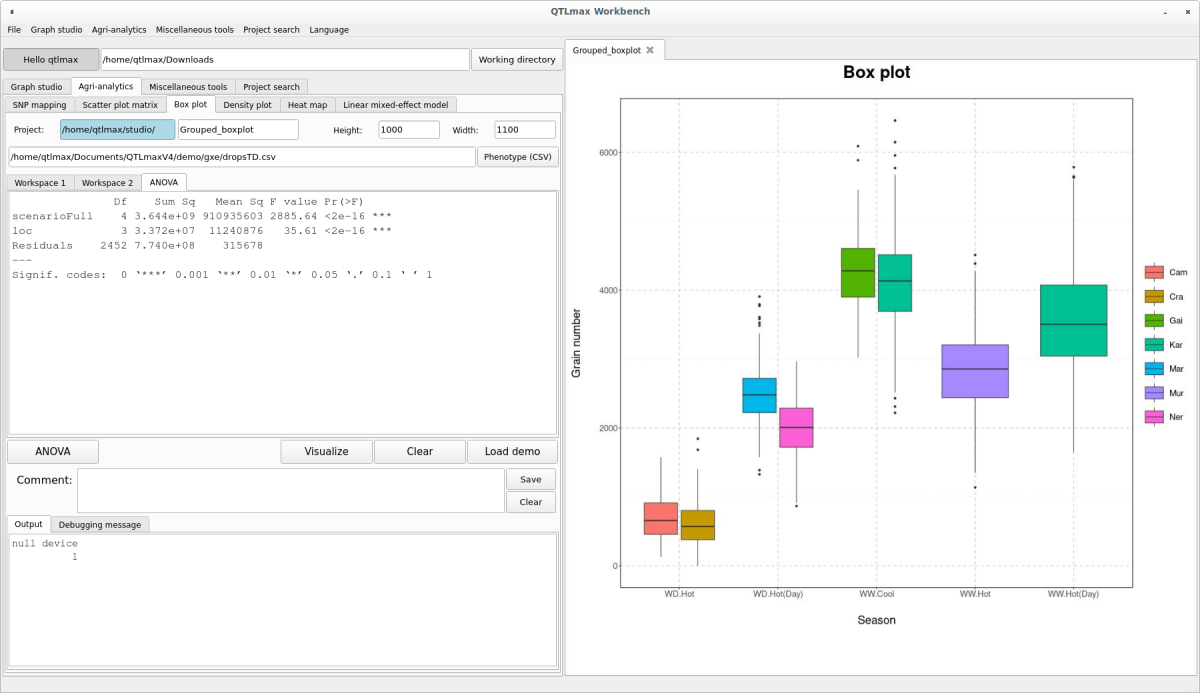
To view the ANOVA analysis results related to the displayed Box plot, simply click the [ANOVA] button. (Figure 4)
(Figure 4)
If you want to see the distribution of traits by environment, simply click the [Quick density plot] button located below the list box of the trait you are interested in. (Figure 5)
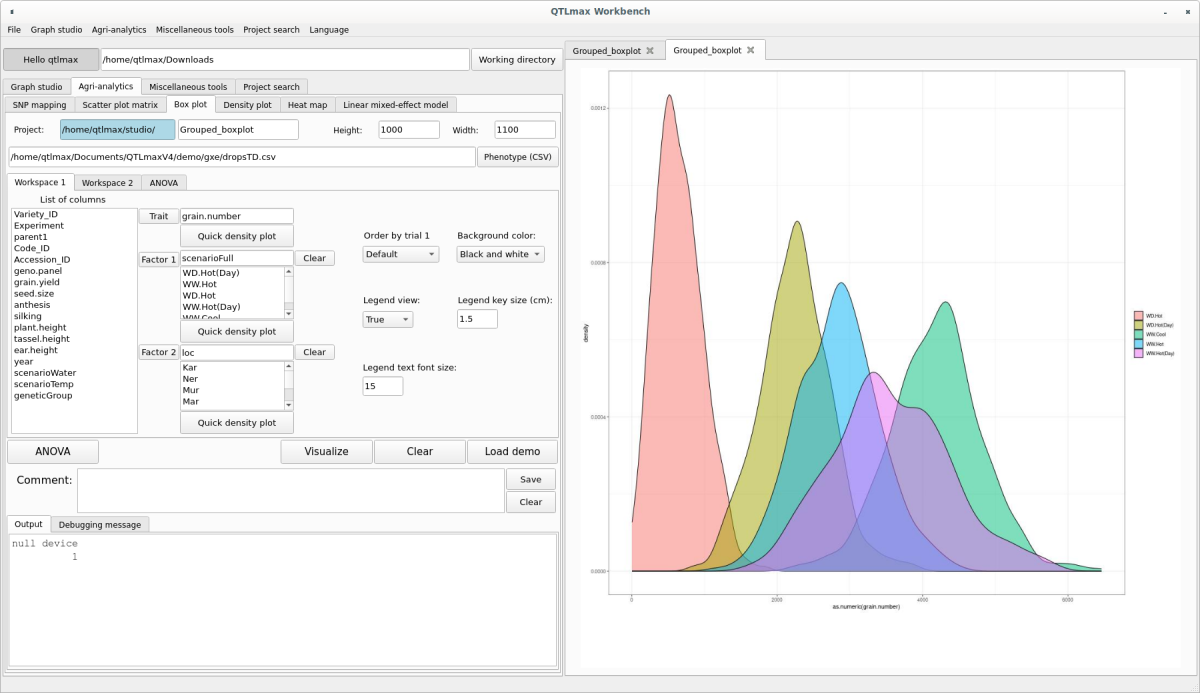
(Figure 5)